Catherine Smith finds this quirky little holiday let makes the ideal base for exploring the North Yorkshire coast
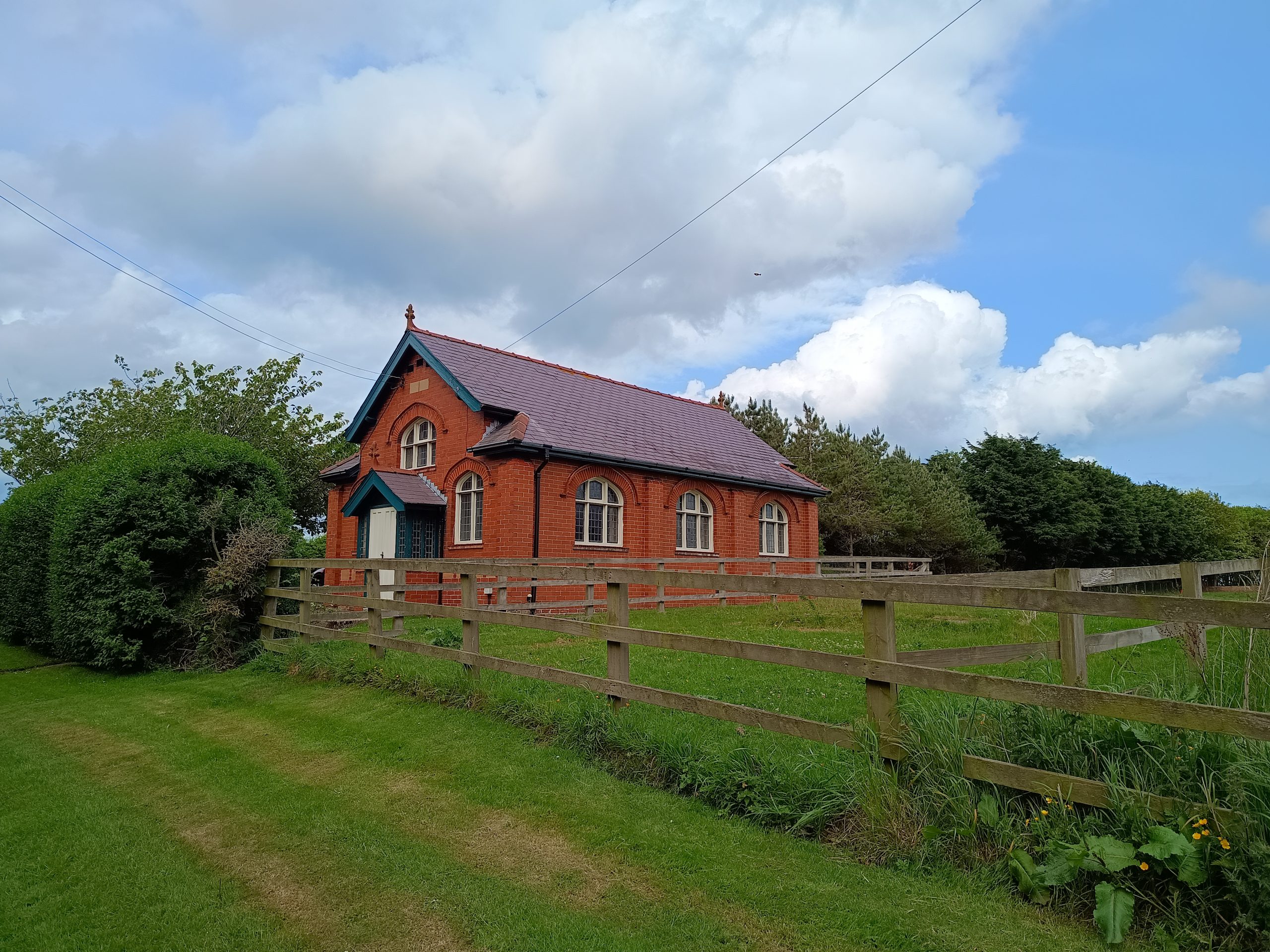
The Chapel
The Old Chapel is nestled in the sleepy village of Speeton. Dating back to the 1920s, it now serves as a quirky let. Perfectly placed between Filey and Bridlington, it provides an ideal base for exploring the North Yorkshire coast. The property includes a small, pleasant garden (not secured) and private parking. Inside the chapel is spacious and light retaining much of its original charm including its stained- glass windows and wood panelling. There is a spacious kitchen with a large freezer (ideal for raw feeders) and, to my delight, a spa bath. We arrive on a late Friday afternoon and spend our first evening exploring the area and what Speeton lacks in amenities it makes up for in charm and character.
To read more, you will need to become a member of the DogFriendly Blog for just £1. To join, go to Signup or if already a VIP member login here.
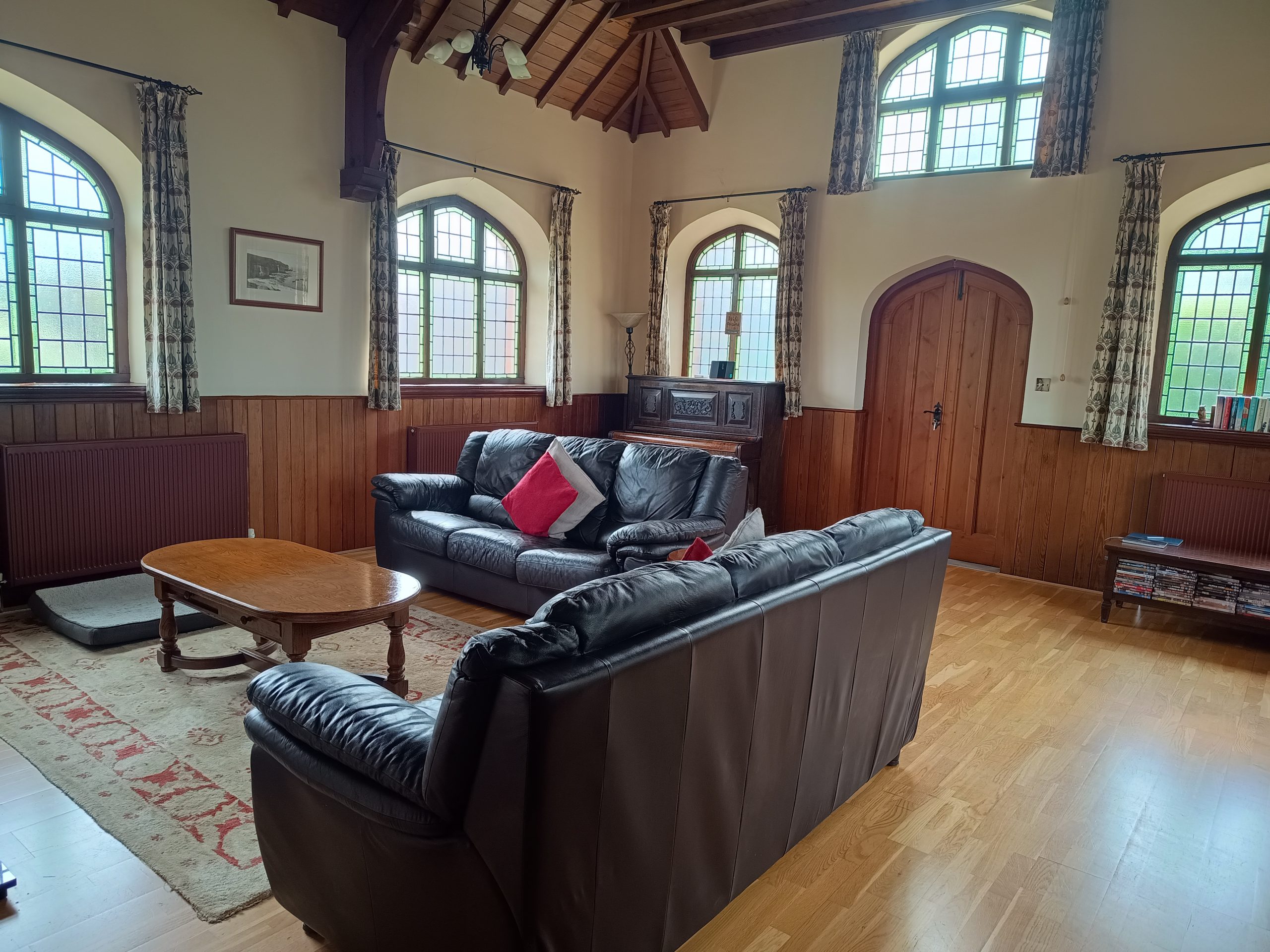
Inside the chapel
The Cleveland Way is just a short walk from the chapel; the picturesque stroll takes you via Yorkshire’s smallest parish church, St Leonard’s, dating back to the early Norman period. There is a path that can be taken from the clifftops down to Speeton Sands but the tide was in so we settled on enjoying the exhilarating views over the North Sea. I’d recommend keeping your dogs on leads when walking the clifftop paths. Saturday, we take a 40-minute drive inland to the deserted medieval village of Wharram Percy. Under the care of English Heritage, entry is free but there are no facilities. The village is situated around three-quarters of a mile from the car park and involves negotiating some rugged terrain, which makes it unsuitable for wheelchair users or buggies. The village was first established around 50BC and at its peak housed around 200 people. All that remains are the outlines of the building foundations, the mill pond and the ruins of the church, which dates back to 10th century. The village became deserted in the 1500s. Ravaged by the plague and raids by the Scots, it was economic reasons that eventually saw its decline. There are around 3000 deserted medieval villages in the UK, but Wharram Percy is one of the best known, as it has been the most studied and a gruesome discovery in recent years has placed it firmly on the map for dark tourism. In medieval times it was believed that digging up bodies and mutilating them would prevent them from rising from the dead. In 2017 a scientific study of the site found that bodies exhumed from a pit at Wharram Percy had been dismembered and burnt after death. Today, though, this picturesque former village belies its macabre past, making a peaceful spot for a picnic.
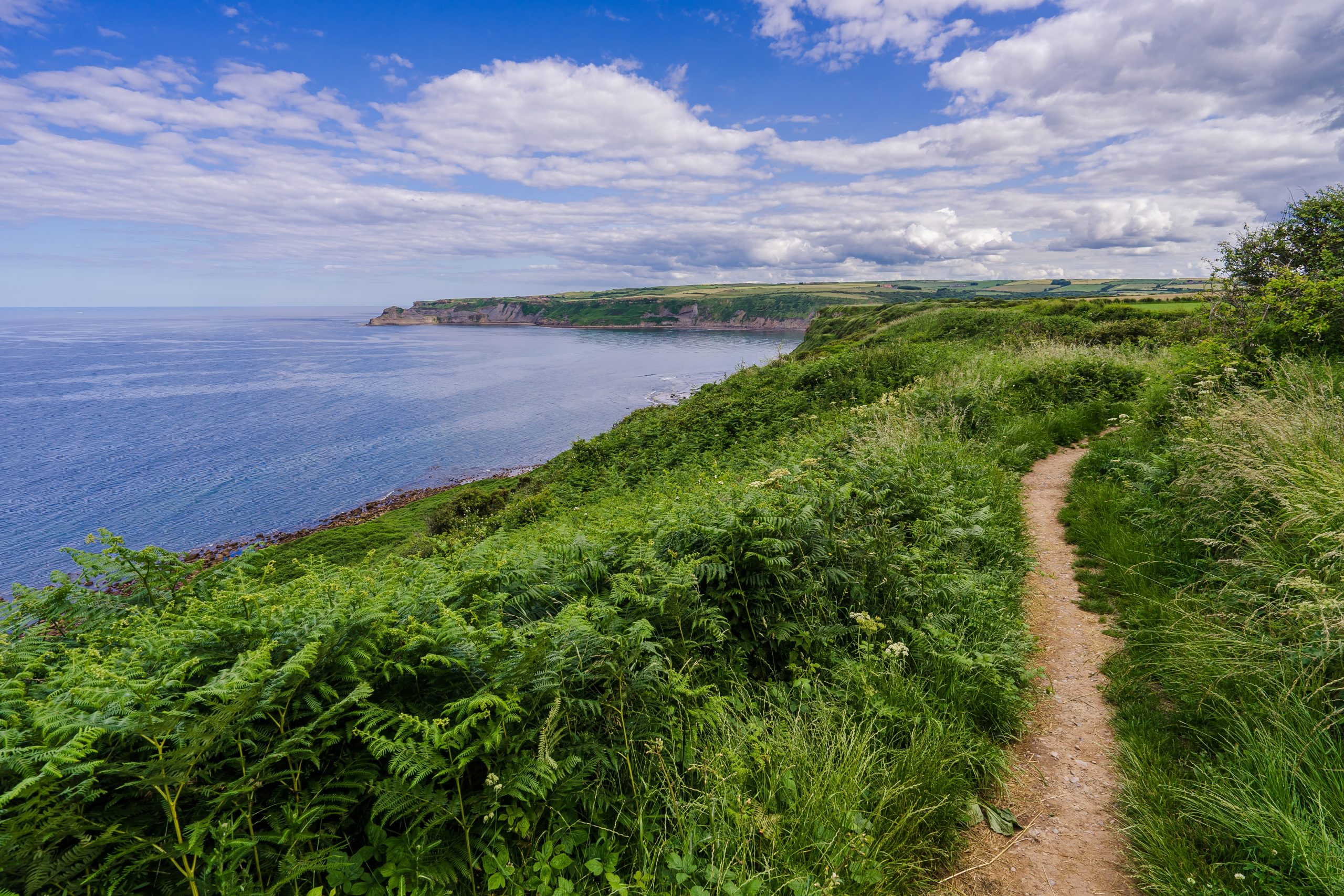
The Clevelands Way
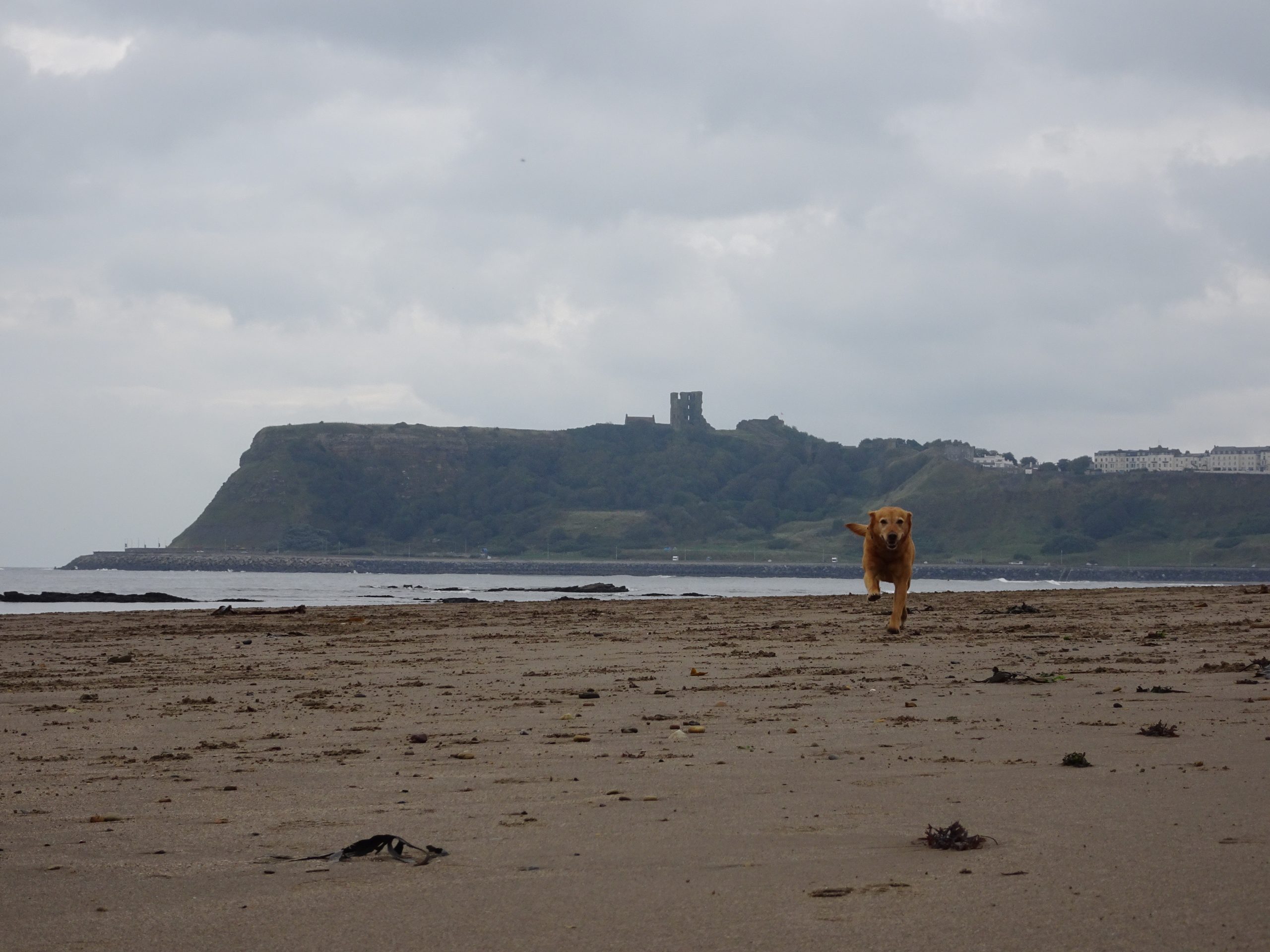
Our next day’s adventures take us to Scarborough. We avoid the hustle and bustle of the shops and arcades and instead head for the old harbour which still remains a busy port to this day. From here we brave the steep ascent to Scarborough Castle ruins. The remains of the 3000-year-old castle maintain its commanding position, boasting giddy, clifftop views. Now under the care of English Heritage, the site welcomes dogs on leads and also has a beautiful wildflower meadow to explore. Just a short walk from the castle resides St Mary’s Church graveyard, final resting place for Anne Bronte. Her gravestone, although a little weathered by the elements, still stands proud. Back at the harbour we enjoy some fish and chips eaten in the comfort of the bay window of the dog friendly Princess Restaurant.
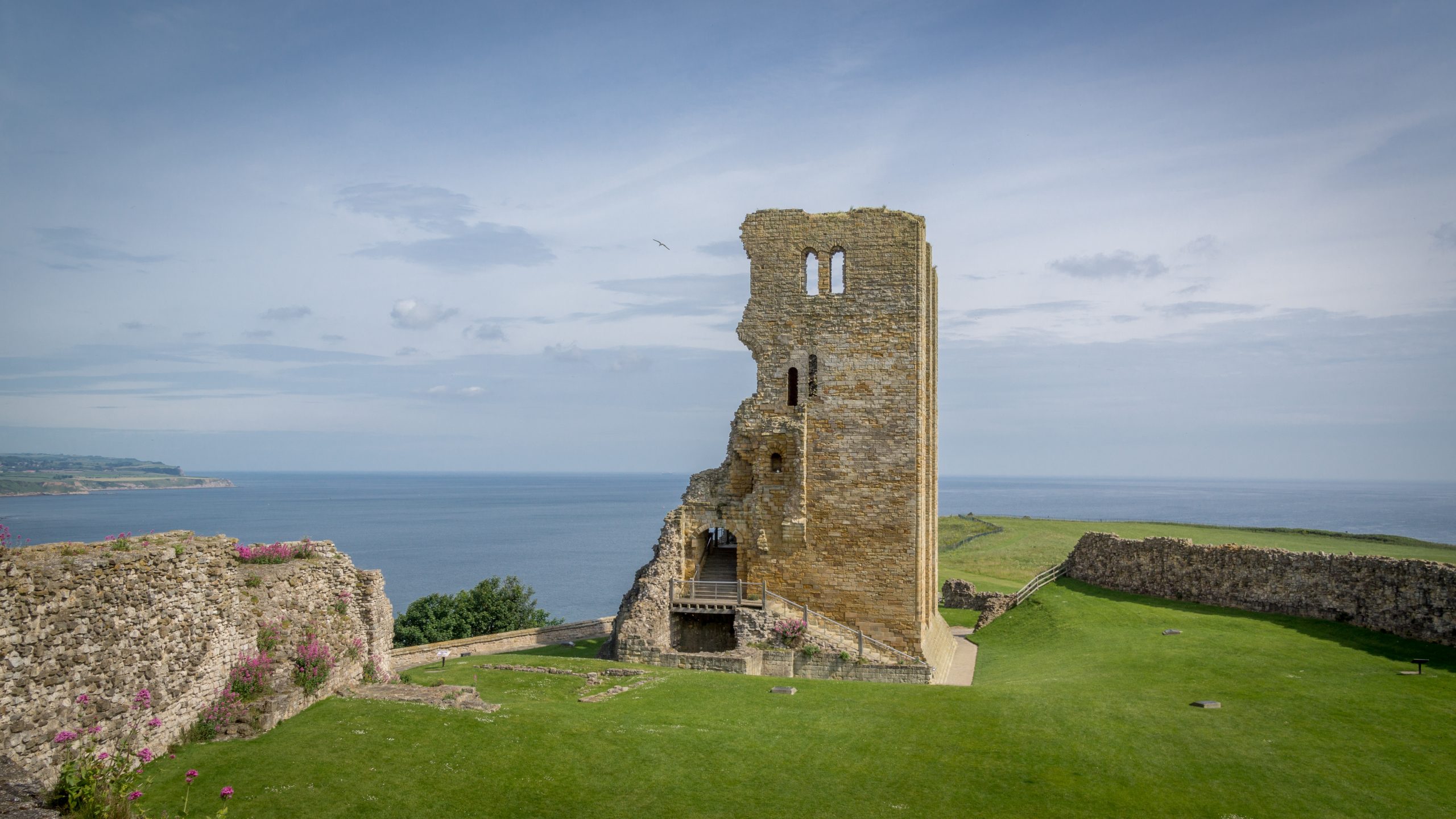
Scarborough Castle
Monday, we take an hour’s drive to Robin Hood’s Bay, one of my all-time favourite places. Visitor parking is situated at the top of a steep hill so visiting the village involves negotiating a descent on cobbled streets. We enjoyed coffee and cake at the Old Coast Guard Station run by the National Trust, which serves exceedingly good cake. Situated next to the slipway, be sure to take a little peek at the start of the network of smuggling tunnels that run underneath the village. We took a walk around the atmospheric, narrow cobbled streets, lined with charming former fisherman’s cottages and happily spent the remainder of day on the beach fossil hunting. You are almost guaranteed to find something here (be sure to check your tide times) but if you are not in luck, you can always buy a souvenir from the Dinosaur & Fossil Shop before taking a weary trek back up the hill. Not to be daunted by arduous inclines, the following day we visit Whitby and climb the 199 steps to the stunning abbey ruins. Infamous for its haunting beauty and being the inspiration behind Bram Stoker’s gothic novel Dracula, the abbey does not disappoint. The whole site is dog friendly, including the visitor centre and the YHA Cafe which offers great coffee with a view. Whitby has a rich smuggling and maritime history. Indeed, Captain Cook famously undertook his seaman’s apprenticeship here. If you have the energy for another steep incline then a walk up to the arch comprises two 20ft whale bones on the West Cliff, provides a bracing view over the rocky coast and North Sea. The arch is testament to Whitby’s once booming whaling history (thankfully now a thing of the past). The town boasts two piers with a lighthouse at the end of each that have been guiding fisherman safely into harbour over the centuries. So of course, no trip to Whitby is complete without freshly battered fish and piping hot chips. We forego the huge queue at the infamous Magpie Cafe and dine at the dog friendly Terrys Fish Bar, where even Rufus is offered a drink.
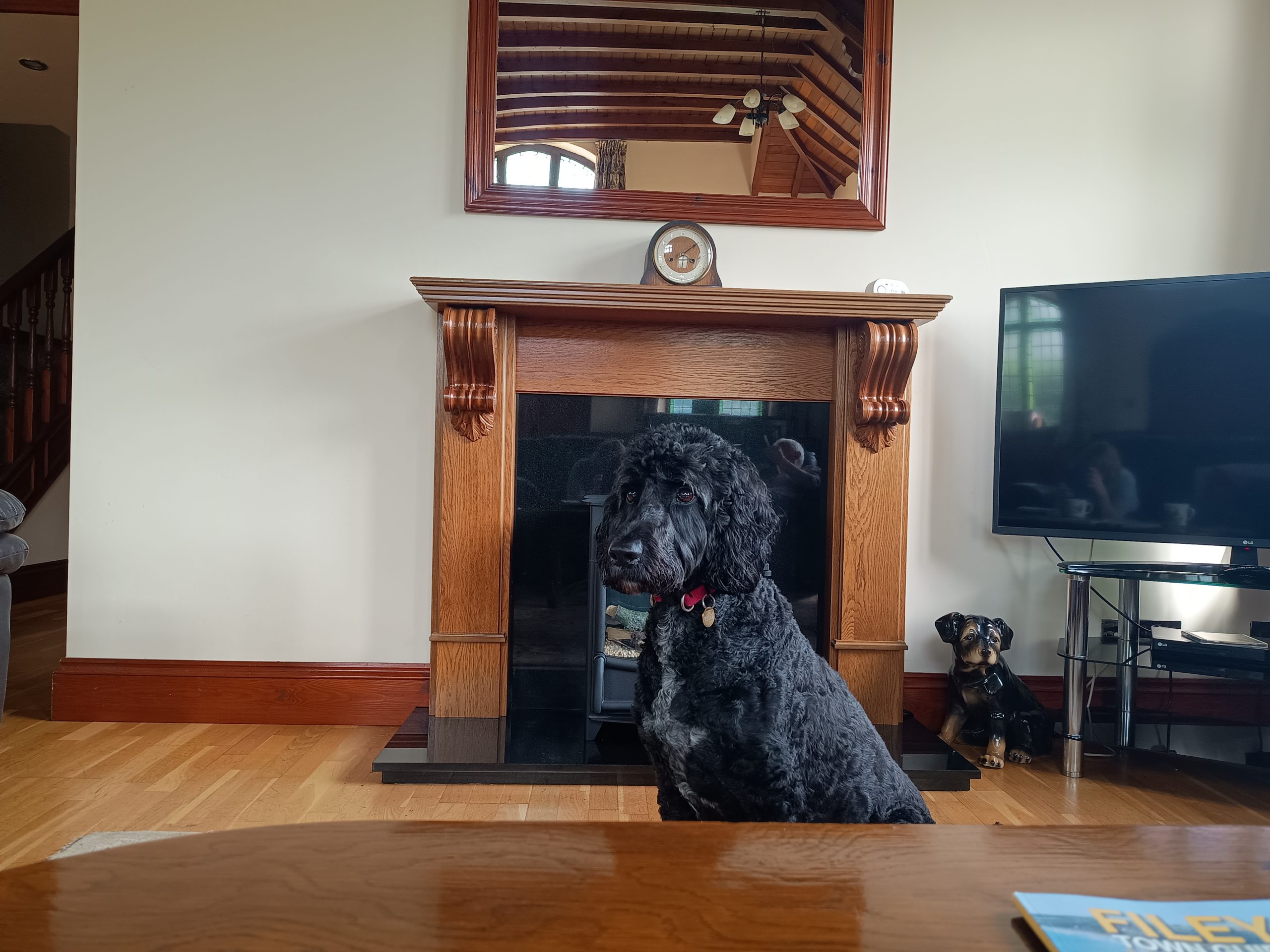
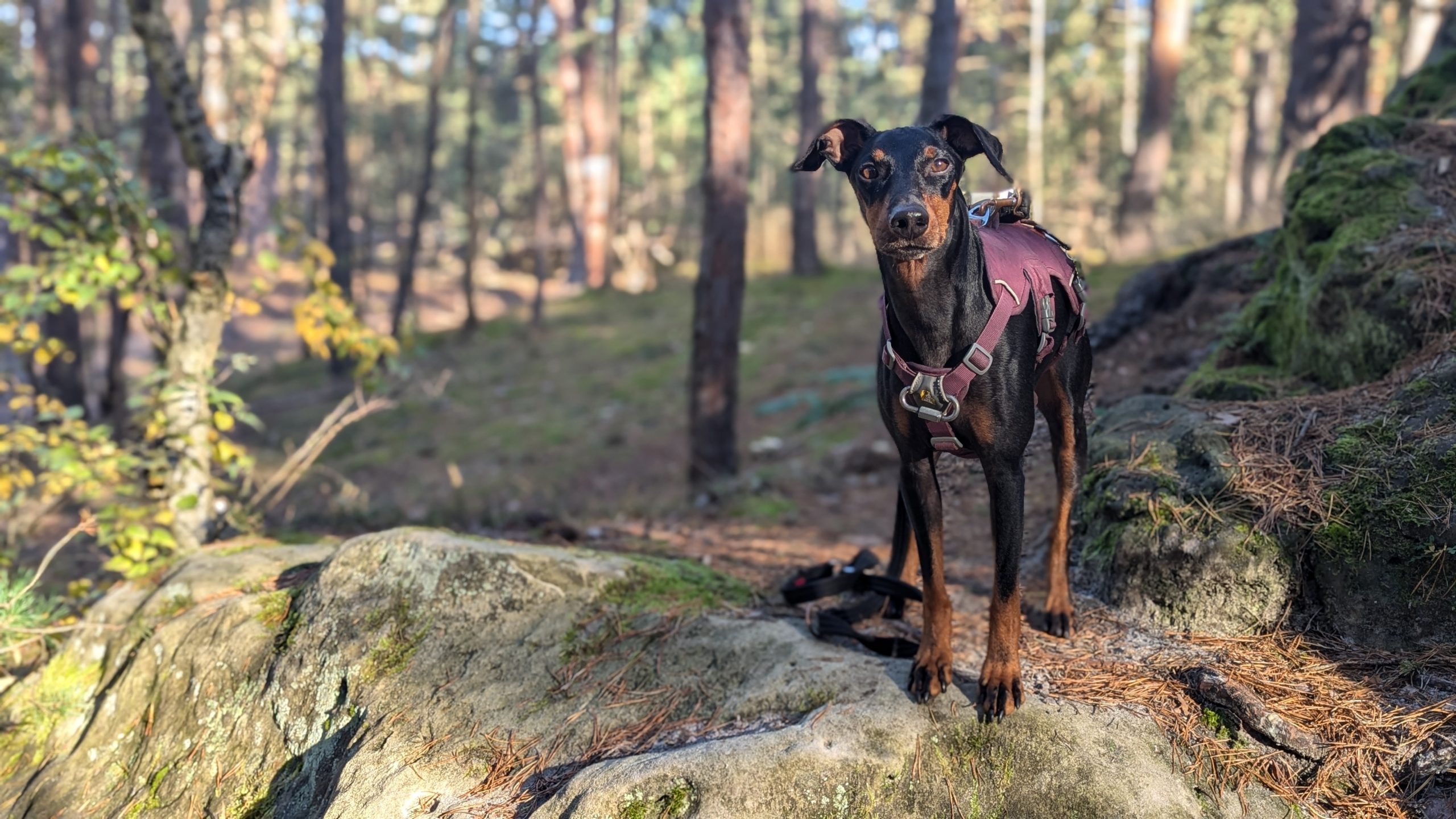
Rufus by the fire
Wednesday, we head to the historic fishing village of Staithes, another haven for fossil hunting, whose charm and beauty has and still does attract a community of artists. Again, parking here is situated at the top of the village, so a visit involves negotiating a steep descent. It’s an overcast day and we shelter from a sudden downpour in Dottie’s Tearoom where much to Rufus’s delighted, he is presented with his own little bag of doggy treats. The rain sets in for most of the day, so we head back to our chapel and spend a cosy afternoon watching DVDs from its extensive collection. Undaunted, the following day we head to Flamborough Head, just a short drive from The Chapel. Flamborough offers some hair-raising, cliff-edge views and we spend a lovely hour watching the colony of grey and common seals who are completely undaunted by the elements. After a soggy walk we take refuge in The Headlands. The restaurant has mixed reviews but it is dog friendly and has an extensive menu and we enjoy a perfectly acceptable meal of a giant, filled Yorkshire pudding. A lucky break in the weather in the afternoon sees us drive to nearby Reighton Sands, which provides yet more opportunities for fossil hunting and rock pooling and Rufus got to enjoy a good run on the glorious stretches of sandy beach.
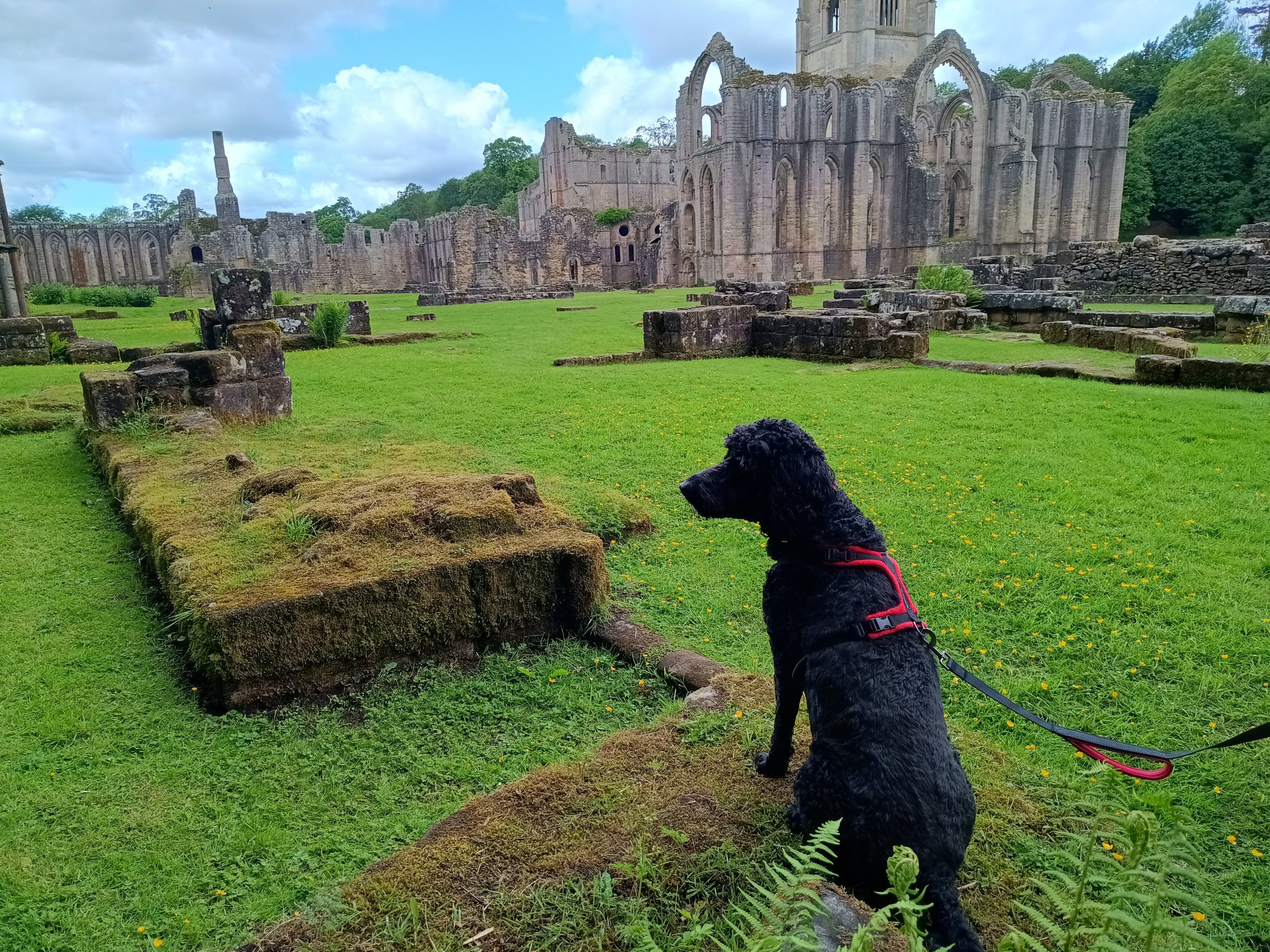
Fountains Abbey
Friday, we said a reluctant farewell to The Chapel and I felt genuinely forlorn to leave what has been our haven for the week. On the way home we take a slight detour to Fountains Abbey. If you get the opportunity this dog friendly UNESCO World Heritage Site is well worth a visit. Now under the care of the National Trust, Fountains Abbey is one of the largest and well-preserved, ruined Cistercian monasteries in England. The cafe also does a lovely cream tea. A whole day could easily be dedicated to visiting Fountains. The ticket price also includes entry to the Studley Royal Water Garden and Royal Deer Park which we sadly did not get to see as we ran out of time. We will certainly be returning to North Yorkshire, which has proved to be a great adventure-filled holiday destination.
FACT FILE
Old Chapel, Speeton
ADDRESS – The old Chapel, Chapel Lane, Speeton, Filey, YO14 9TG
CONTACT cottages.com
PRICE From £397 for 7 nights season dependent. This 2 bedroom property sleeps 4 and accepts 1 dog. It does not have a secure garden and dogs are not permitted on the furniture. Nearest shop is 4 miles.
PLACES TO EAT This is nowhere to eat within walking distance, but you are spoilt for choice at Filey, a 10 minute drive away.
LOCAL INTEREST Reighton sands and a little further afield, there’s Wharram Percy, Scarborough, Whitby, Robin’s Hood Bay and Staithes.
WEBSITE cottages.com