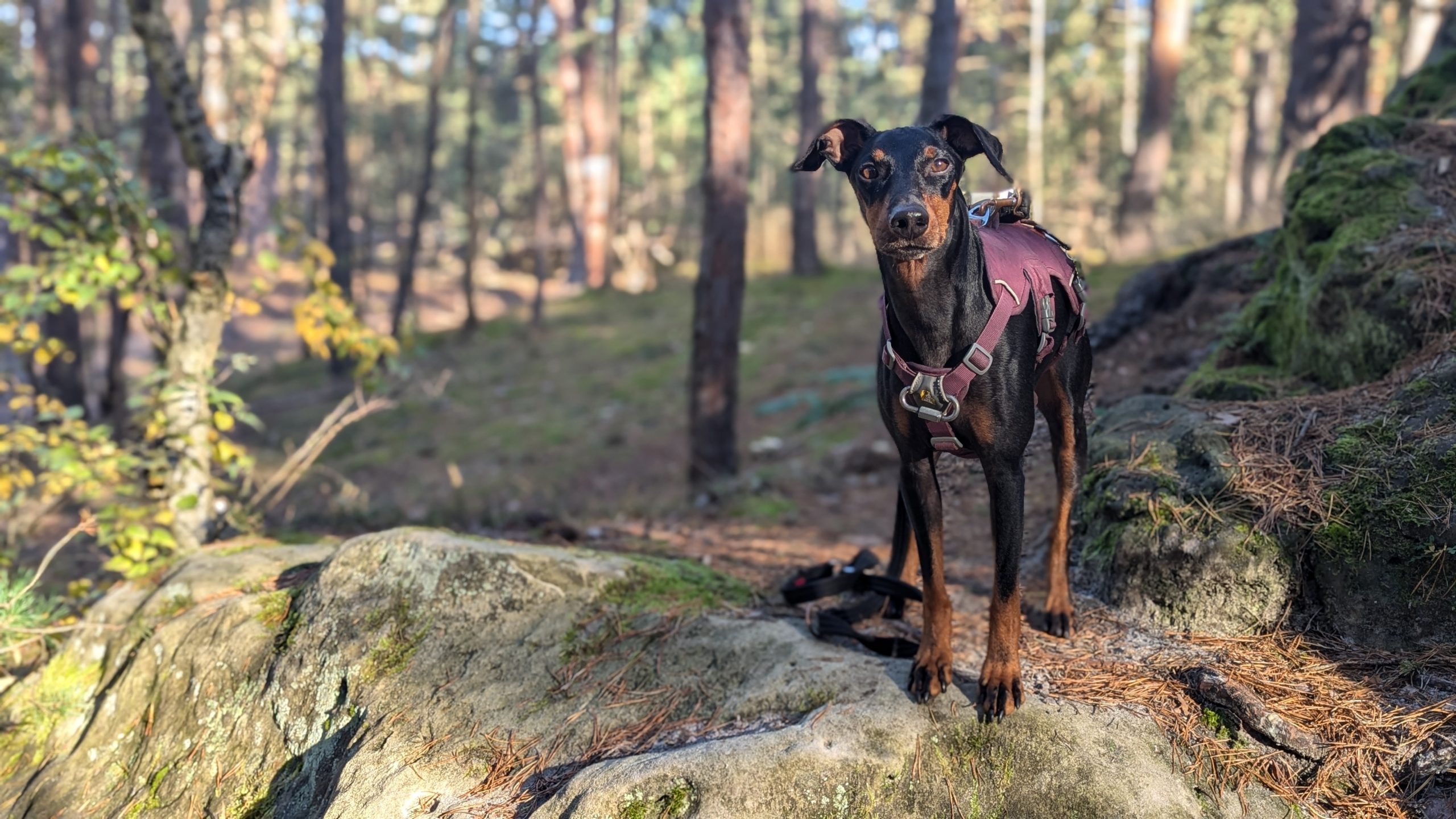
Lottie Gross discovers Germany’s.attitude to dogs is similar to our own – they’re part of the family.
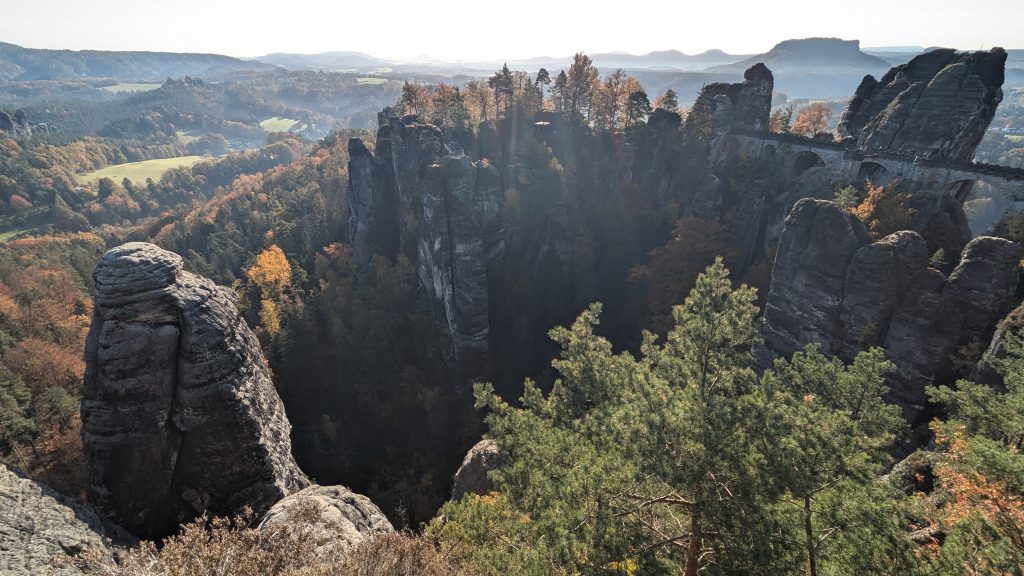
Bastei
II’ve been travelling around Europe for the last 12 months in pursuit of the best dog friendly destinations for my next book, a Europe-centric follow on from Dog Days Out, which covers dog friendly fun in the UK and Ireland. I’ve done Italy by train, France, Spain and Portugal by caravan, and a road trip in Belgium and the Netherlands. My final destination on this mission was Germany, where I had envisaged long walks amid autumnal forests and the dog had his sights set on flame-grilled bratwurst. Now there’s no denying it: Germany is a long way to go for a holiday with your dog.On the advice of Discover Ferries – my go-to resource for information about pet-friendly ferry travel to the continent – I took the DFDS Newcastle to Amsterdam sleeper service (the dog stayed with me in a cabin) to deposit me as close to the German border as I could get. From Amsterdam’s sea port, it was an eight-hour drive into the Harz National Park where I began my Germany odyssey.
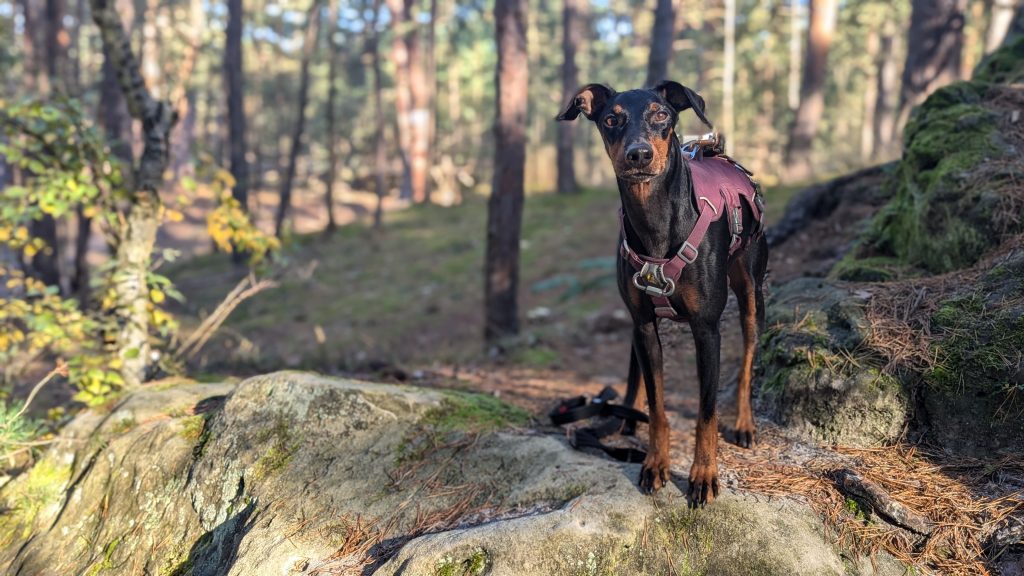
Blackenburg
Doing the drive alone was gruelling – Arty, my Manchester Terrier, has little chat to keep me entertained behind the wheel – but the reward was plenty. We checked into the Relais & Chateaux Harenberg Berghotel, which has its own castle atop a hill that you can borrow the keys to for your own private dog walk among the ruins. We spent our first day in the Harz National Park in the WeltWald arboretum, which delivered exactly what I’d dreamed of: exceptionally colourful autumn leaves, from iridescent acers in reds and yellows, to the soothing browns and gold of oak and birch. The Harz Mountains is a modest range whose highest peak is just over 1000 metres. Its slopes once flourished with plantations of spruce, but today it has an unusual landscape. The forest has now been ravaged by a parasite beetle and the silvery spruce trunks stand lifeless across the slopes, giving an eerie edge to mountain-top walks with the dog. We used a network of dog friendly gondolas and steam trains to explore its peaks and valleys, took boat trips on its reservoirs and toured some of the former ore mines that made the region rich in the 19th century.
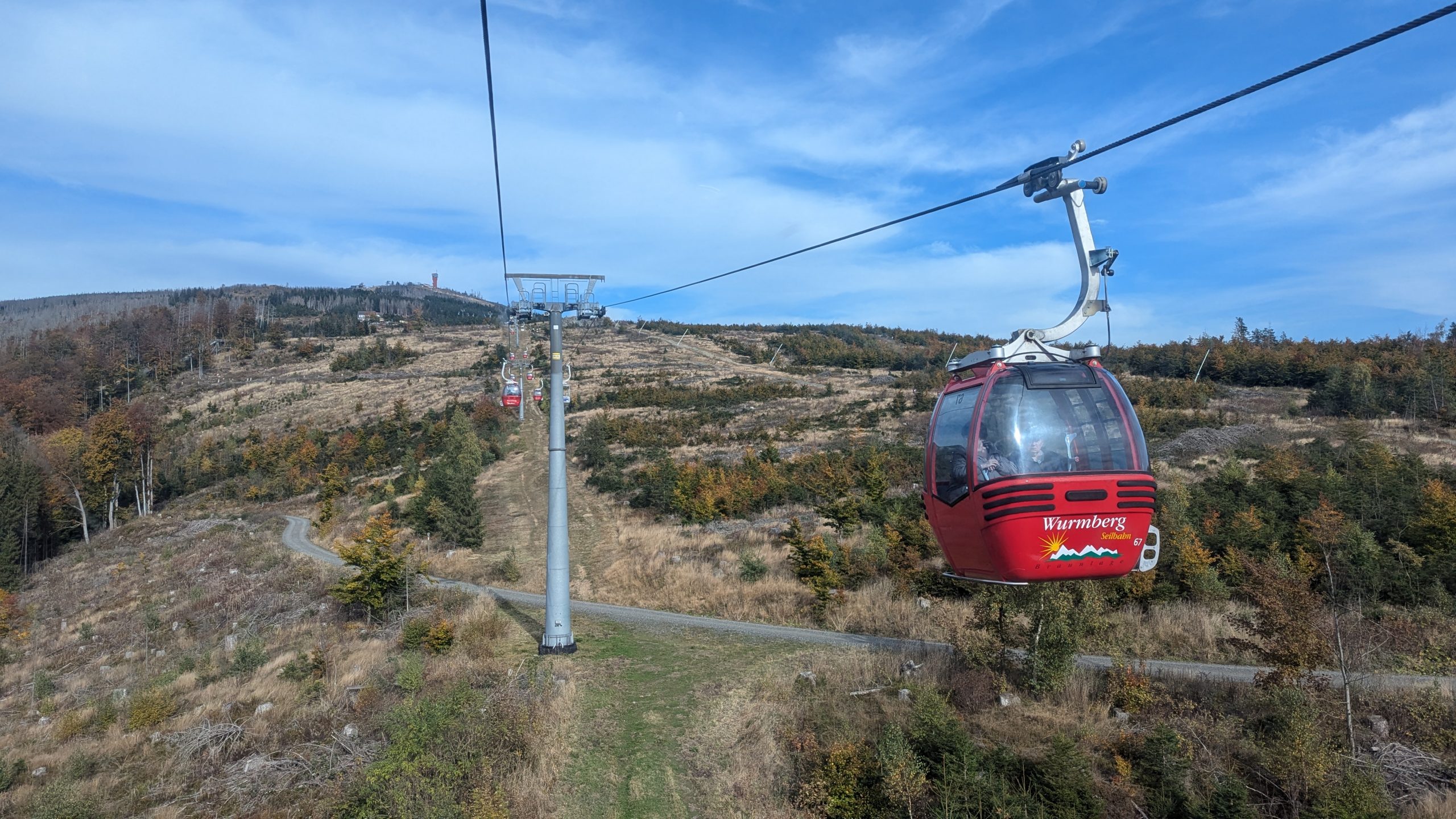
Braunlage Cable Car
Germany has long been lauded for its excellent infrastructure – rail and road routes abound connecting towns and cities across the land. In the countryside there is no exception: a network of ferries, trams, trains and buses made exploring Saxon-Switzerland National Park a breeze (don’t miss the spectacular Bastei Bridge or Königstein Fortress, where rock stacks and naturally formed towers create an otherworldly landscape). Up in Usedom on the Baltic coast, a small train network and excellent cycle routes offer a brilliant way to get around the island, whose white-sand beaches are spectacular and have dog friendly sections year round. Usedom and its pretty spa town of Heringsdorf are an ideal summer escape from the heat waves of southern Europe.
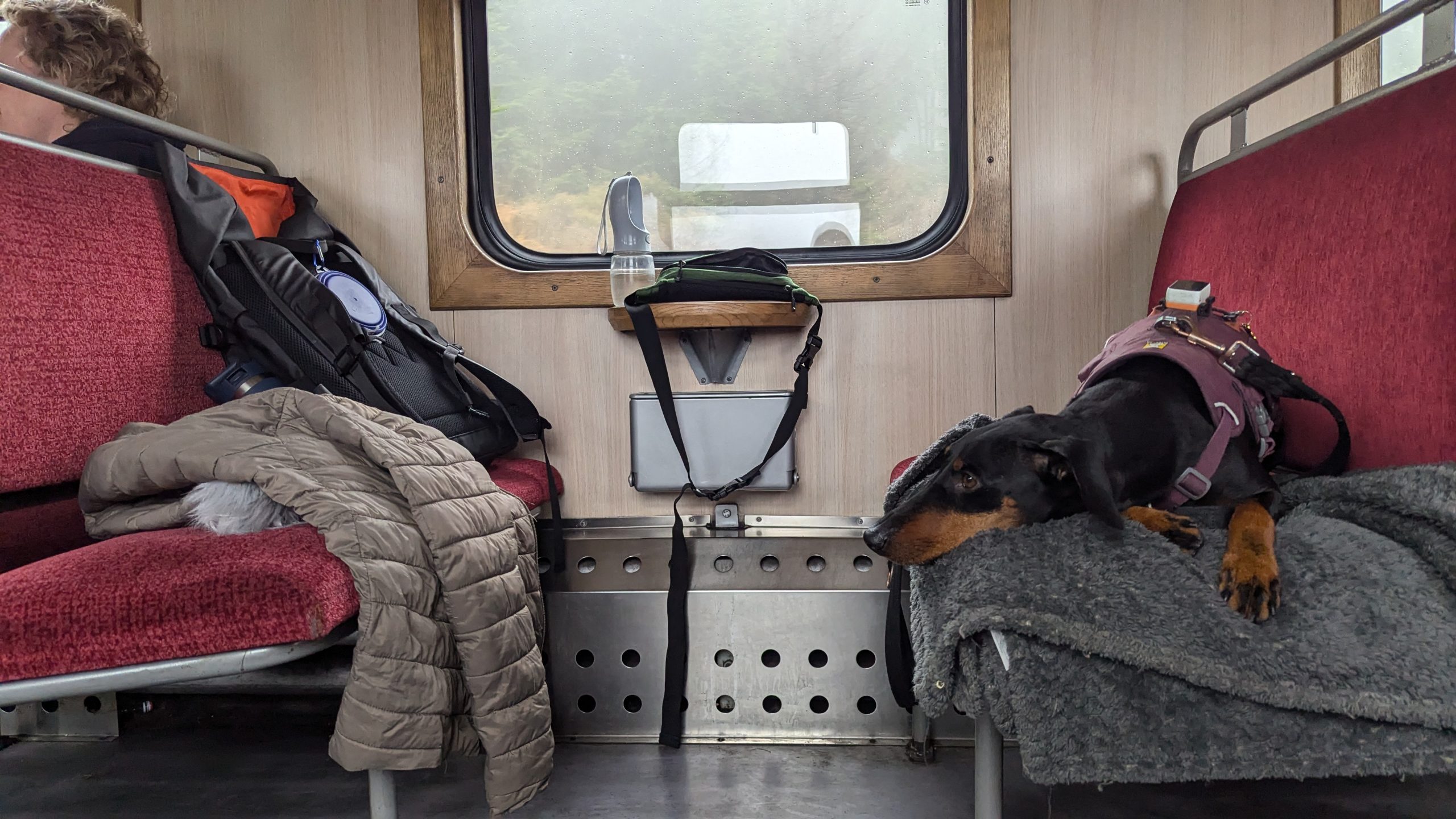
Brocken Railway
We spent time exploring Leipzig’s Music Trail, boated on the Elbe in Dresden, and walked the streets of dynamic Berlin with a Tours by Locals guide, who had all the best tips for dog friendly adventures in the city while the dog got comfortable in the Grand Hyatt with his own bed and bowl of treats, right next to the massive Tiergarten park. While it’s some distance to travel from the UK, we found that Germany’s attitude to dogs is generally similar to ours. They are part of the family and the fabric of Germany’s history.
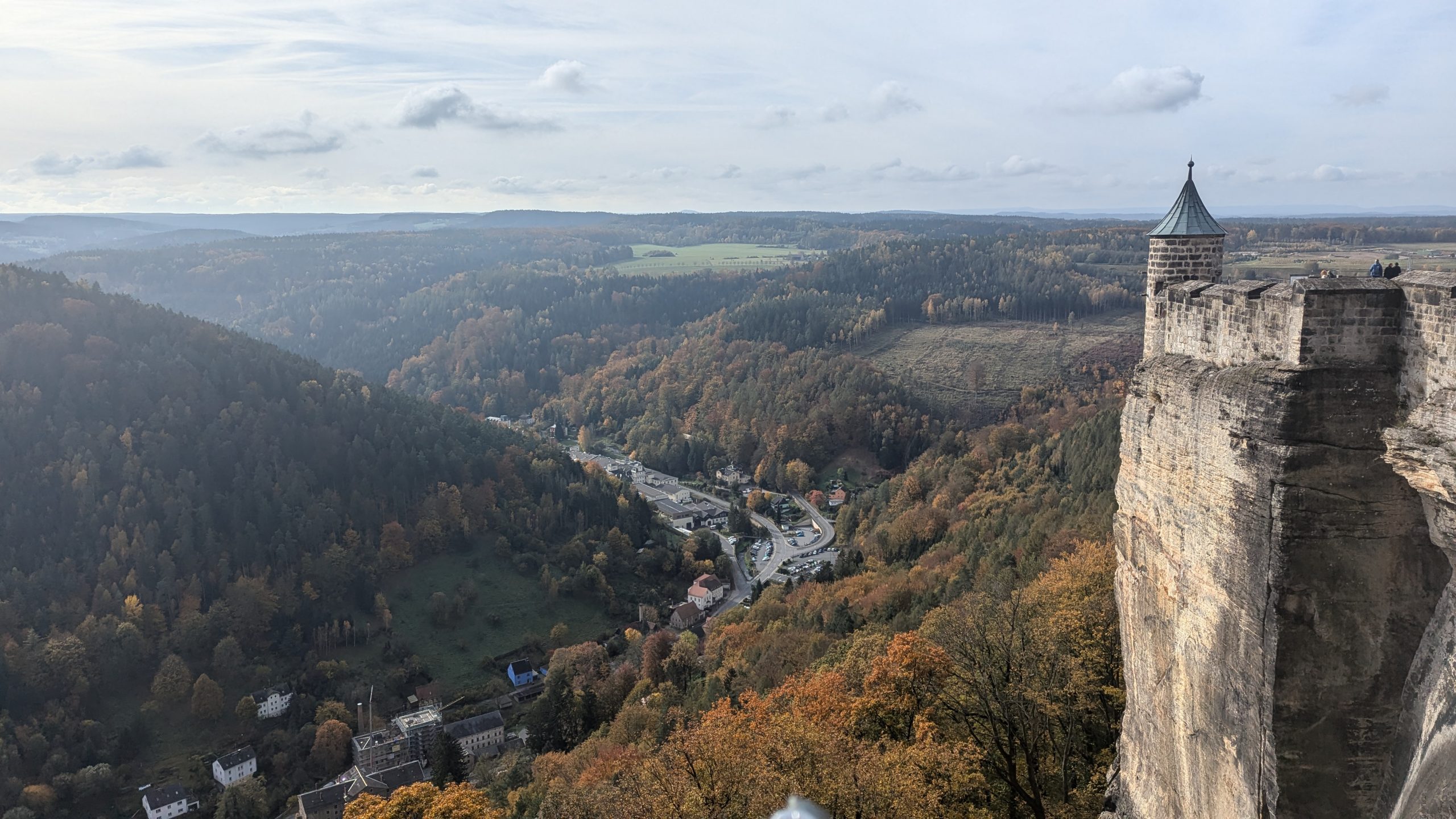
Konigstein Fortress
We stayed at:
• In the Harz region they stayed at Relais & Chateaux Harenberg Berghotel: relaischateaux.com
• In Dresden they stayed at the Moxy Dresden Neustadt: marriott.com
• In Berlin they stayed at the Grand Hyatt Berlin: hyatt.com
• Tour by Locals guide Martin Sauter can be booked via: toursbylocals.com
• In Usedom they stayed at Villa San Remo: villasanremo.de